It’s mid-July 2026, and the thermostat in Gilbert, Arizona, just hit 108°F. If you’re a pool owner in the East Valley: whether you’re in Mesa, Chandler, or out in Queen Creek: you know that this isn’t just "dry heat." It’s a relentless, water-evaporating, chlorine-eating force that can turn a sparkling blue oasis into a swampy green science project in about 48 hours.
After 21 years of running Complete Aquatic Solutions, I’ve seen every pool mistake in the book. Most of them happen right now, when the heat peaks and the monsoon dust starts kicking up in San Tan Valley.
If you’re DIY-ing your pool care to save a few bucks or just because you like the work, you need to adjust your strategy for the Arizona peak season. Here are the 7 biggest mistakes I’m seeing this summer and exactly how to fix them before your equipment fails or your water turns sour.
1. The "Once a Week" Testing Trap
Most homeowners are conditioned to test their water on Saturday mornings. In April? That’s fine. In 108°F July? That’s a recipe for disaster. Between the intense UV index and the heavy bather load from the kids being home for summer break, your chlorine levels can drop to zero in a single afternoon.
Check free chlorine and pH at least twice daily, and more often with heavy swimming, following CDC home-pool guidance. Use a suitable kit according to its instructions. A service visit or clear-looking water does not confirm the conditions between tests. CDC testing guidance.
2. Shocking Your Pool While the Sun Is Up
I see this constantly in Mesa and Chandler. A homeowner sees the water looking a bit dull at 2:00 PM, grabs a bag of shock, and dumps it in. In this heat, the sun’s UV rays are so intense that they will "eat" your unstabilized chlorine almost as fast as you can pour it in. You’re essentially throwing money into the atmosphere.

Choose treatment from current measurements, actual pool volume and the product label. Treatment time alone does not prove the pool is ready to swim. Retest sanitizer and pH, follow label reentry directions and keep swimmers out if visibility or water conditions are uncertain. CDC guidance.
3. Underestimating the "Thirst" of a Desert Pool
Evaporation in Queen Creek and San Tan Valley can be brutal. We can lose up to half an inch of water a day when the humidity is low and the temps are high. If your water level drops below the midpoint of the skimmer, your pump starts sucking air.
The Fix: Check your water level daily. If it gets too low, your pump will lose prime and could literally melt its own internal components from the heat. Keep the water right at the halfway mark of the skimmer opening. If you’re constantly filling it up, you might not just have evaporation: you might have a leak. If you suspect that, don't wait; it'll cost you a fortune in water bills.
4. Running the Pump Like It’s Winter
Set circulation using the actual pool, equipment and flow requirements. Confirm the filter, sanitizer, heater and cleaner minimum flow requirements before selecting pump speed or schedule. A universal number of hours cannot establish adequate filtration or disinfection. Inspect results and adjust with qualified help; a variable-speed pump can use different schedules for different tasks. Pentair servicing guidance.

Set circulation using the actual pool, equipment and flow requirements. Confirm the filter, sanitizer, heater and cleaner minimum flow requirements before selecting pump speed or schedule. A universal number of hours cannot establish adequate filtration or disinfection. Inspect results and adjust with qualified help; a variable-speed pump can use different schedules for different tasks. Pentair servicing guidance.
5. Neglecting the Stabilizer (CYA)
Think of Cyanuric Acid (CYA) as sunblock for your chlorine. Without it, the Arizona sun destroys your chlorine in minutes. However, there’s a catch: too much CYA (often from overusing chlorine tabs) makes your chlorine ineffective. This is one of the most common east valley pool problems 2026 I’m diagnosing this year.
Assess actual free chlorine and pH readings alongside cyanuric acid, filtration and circulation. High CYA affects disinfection, but a single threshold does not make all chlorine useless. Phosphate, hardness or filter problems likewise require diagnosis rather than an absolute claim that chlorine cannot work. Follow your sanitizer label and get qualified advice before changing water; do not drain based on this article alone. CDC testing guidance.
6. Ignoring the Filter Pressure
With the wind we get in Gilbert and Mesa, dust and debris end up in your filter fast. A dirty filter slows down your flow, which means your Pentair Rebel pool cleaner won't move as well, and your salt cell (if you have one) might stop producing chlorine.

Compare pressure with the recorded clean baseline at the same pump speed, and use the exact filter model’s cleaning trigger. A universal pressure increase does not apply to every filter. Identify whether the filter is cartridge, sand or DE before service; cartridge filters are not backwashed. Follow shutdown, pressure-relief and reassembly instructions, and get qualified help if you cannot safely perform them. Pentair cartridge-filter manual example.
7. Letting Your Automation "Do Everything"
We love pool automation tools. Systems like the Pentair IntelliCenter make life easy. But they aren't "set it and forget it." I’ve seen many pools turn green because the homeowner assumed the salt cell was working, only to find out it had a calcium buildup or a "low flow" error that went unnoticed for a week.
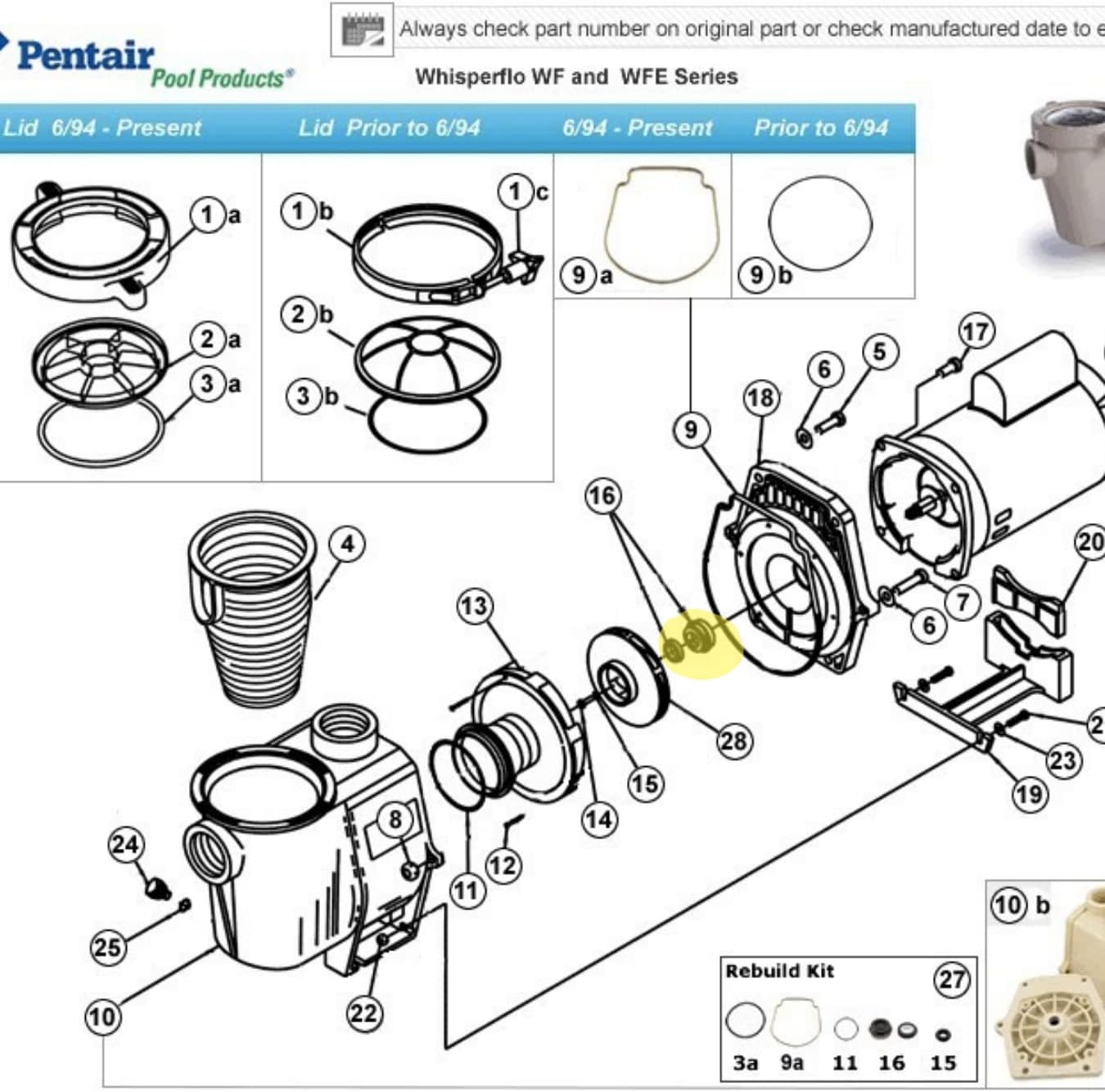
The Fix: Even if you have the best automation in the world, you still need to walk the equipment pad once a week. Look for drips, listen for weird hums, and check the screen for alerts. Knowing the "anatomy" of your pump (like the Pentair Whisperflo diagram above) helps you spot trouble before it becomes a $1,500 replacement.
The Bottom Line for East Valley Pool Owners
Maintaining a pool in Gilbert, Mesa, or Chandler doesn't have to be a full-time job, but it does require a different playbook during the summer heat. If you're struggling to keep the water clear or your equipment is acting up, don't just throw chemicals at it and hope for the best.
If you’re a DIYer who just needs a second opinion, or if you’re a commercial property manager in Queen Creek looking for a reliable expert, we’re here to help. You don't always need a technician to drive to your house and charge a service fee just to tell you what's wrong.
Check out our Virtual Service Call option. You send me photos and videos of the problem, and I’ll give you a real diagnosis based on 21 years of experience. It’s the fastest way to get an expert "Ask the Tech" answer without the wait.
Stay cool out there, and keep those filters clean!
( Jeff)