When the thermometer in Queen Creek or Gilbert hits 112°F, your pool isn't just a place to cool off: it’s a living chemical ecosystem fighting for its life. I’ve spent over 21 years maintaining commercial and residential pools across the East Valley, and if there’s one thing I know, it’s that Arizona heat doesn’t care about your "usual" maintenance schedule.
What worked in April will fail you in July. The intense UV radiation and soaring water temperatures change the rules of the game. If you're noticing your water getting a little cloudy or that "chlorine smell" is getting stronger (hint: that’s actually a sign of not enough free chlorine), you might be making one of these common mistakes.
Here are the 7 biggest mistakes I see homeowners and property managers in Mesa, Chandler, and San Tan Valley making during a heat spike: and exactly how to fix them before your pool turns into a science experiment.
1. Sticking to a "Fixed" Chlorine Schedule
In the middle of an Arizona summer, chlorine is like gas in a car with a leak: it disappears faster than you can refill it. Many DIYers add their chemicals on a set day every week. While that works in the winter, a 112° day can burn off 50% to 90% of your pool's chlorine in just a few hours of direct sunlight.
Check free chlorine and pH at least twice daily, and more often with heavy swimming, following CDC home-pool guidance. Use a suitable kit according to its instructions. A service visit or clear-looking water does not confirm the conditions between tests. CDC testing guidance.
2. Running the Pump Only at Night to "Save Money"
I get it: SRP and APS rates aren't cheap. But running your pump only at night during a heatwave is a recipe for a green pool. Algae loves stagnant, hot water. When the sun is beating down at 2:00 PM, that’s when your water needs to be moving and your chemicals need to be circulating.
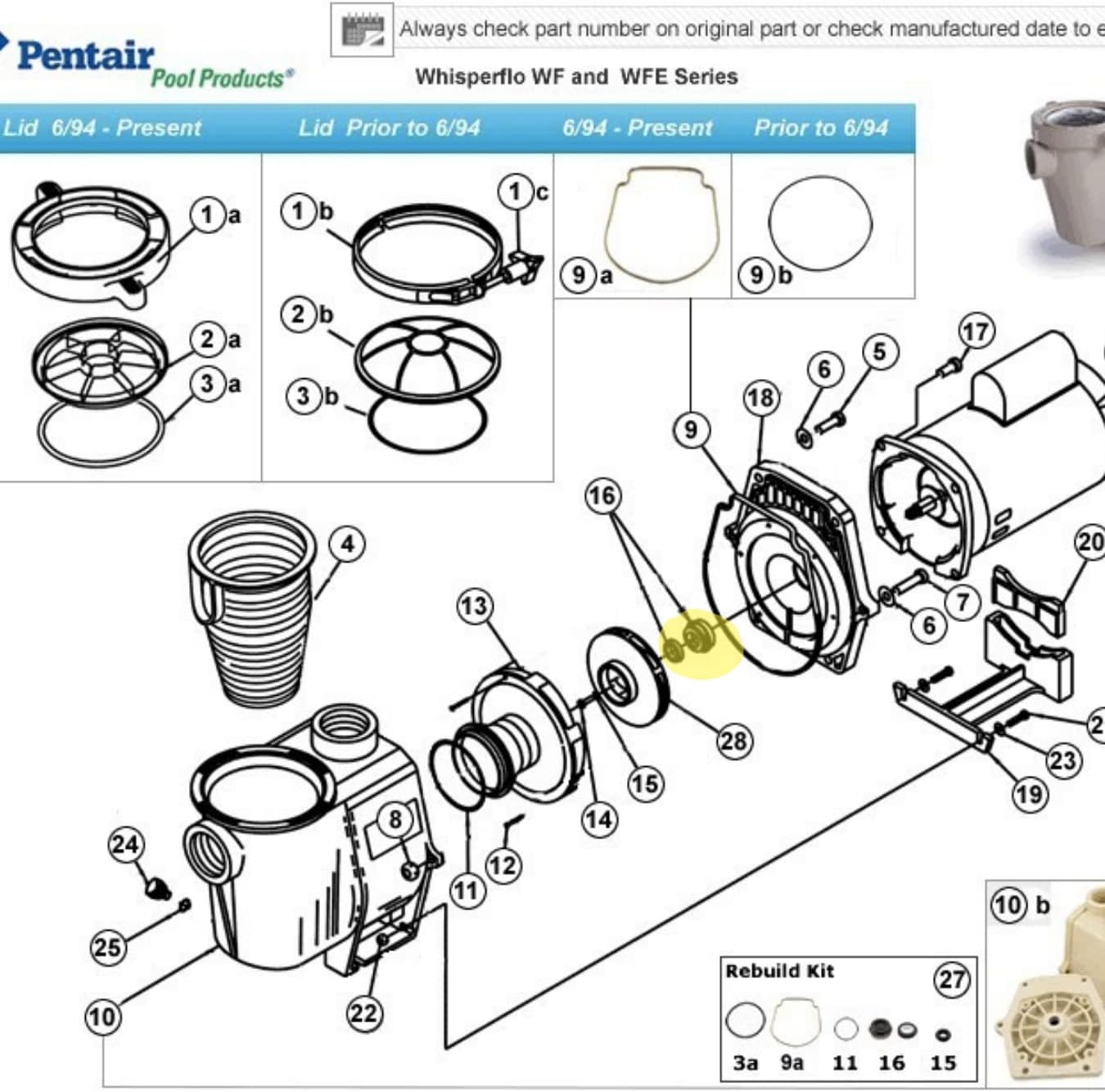
Set circulation using the actual pool, equipment and flow requirements. Confirm the filter, sanitizer, heater and cleaner minimum flow requirements before selecting pump speed or schedule. A universal number of hours cannot establish adequate filtration or disinfection. Inspect results and adjust with qualified help; a variable-speed pump can use different schedules for different tasks. Pentair servicing guidance.
3. Falling into the "Tablet Trap" (CYA Creep)
Those 3-inch chlorine tabs are convenient, but they are packed with Cyanuric Acid (CYA), also known as stabilizer. In Arizona, we don’t drain our pools often because of the water cost and the risk of "popping" a pool shell in the heat. Over time, those tablets drive your CYA levels through the roof. When CYA gets too high (above 80-100 ppm), it "locks" your chlorine, making it ineffective.
Assess actual free chlorine and pH readings alongside cyanuric acid, filtration and circulation. High CYA affects disinfection, but a single threshold does not make all chlorine useless. Phosphate, hardness or filter problems likewise require diagnosis rather than an absolute claim that chlorine cannot work. Follow your sanitizer label and get qualified advice before changing water; do not drain based on this article alone. CDC testing guidance.
4. Ignoring the "Skimmer Line" (The Evaporation Factor)
In Mesa and San Tan Valley, we can lose up to half an inch of water a day to evaporation during a heat spike. If that water level drops below the mouth of the skimmer, your pump will start sucking air. This leads to loss of prime, overheating, and potentially melting your PVC plumbing or killing your motor.
Use multiple layers of protection: restricted unsupervised access, active adult supervision and emergency preparation. No single measure eliminates every drowning risk. Alarms do not replace supervision.
5. Neglecting the Filter PSI
Heat increases algae growth, and even if you can't see the algae yet, your filter is likely catching the microscopic spores. As the filter gets dirty, the pressure (PSI) goes up, and the flow rate goes down. Poor flow means poor chemical distribution and poor cleaning.
Compare pressure with the recorded clean baseline at the same pump speed, and use the exact filter model’s cleaning trigger. A universal pressure increase does not apply to every filter. Identify whether the filter is cartridge, sand or DE before service; cartridge filters are not backwashed. Follow shutdown, pressure-relief and reassembly instructions, and get qualified help if you cannot safely perform them. Pentair cartridge-filter manual example.

6. Skipping the Brush
Even the best automatic pool cleaners, like the Pentair Rebel, can't get into every corner and crevice. Algae creates a protective "biofilm" that protects it from chlorine. Brushing breaks that film and pushes the algae into the water where the chlorine can actually kill it.
The Fix: Brush your pool walls, steps, and benches at least once a week: even if the pool looks clean. Think of it like brushing your teeth; you do it to prevent the grime from building up, not just when you see it.
7. Chemical Dumping Without Testing
I’ve seen it a hundred times: a homeowner sees a "dull" looking pool and throws in three bags of shock and a gallon of algaecide. This "guesswork" often makes things worse, throwing off your pH and Total Alkalinity (TA). High pH makes your chlorine significantly less effective: at a pH of 8.0, your chlorine is only about 20% as active as it is at 7.4.
The Fix: Never add chemicals without testing first. Keep your pH between 7.4 and 7.6. If your alkalinity is out of whack, your pH will swing wildly. For most Arizona pools, keeping TA around 80–100 ppm provides the "buffer" you need to keep things stable.
Why Local Expertise Matters
Maintaining a pool in Queen Creek or Apache Junction isn't like maintaining one in the Midwest. We deal with hard water, extreme UV, and monsoon dust that can turn a pristine pool into a swamp overnight.
At Complete Aquatic Solutions, we specialize in the equipment that keeps these pools running, especially Pentair automation and filtration systems. Whether you're an HOA manager responsible for a community pool in Gilbert or a homeowner in Chandler trying to keep the kids' summer going, we’re here to help.
Not Sure What’s Wrong? Try Our Virtual Service Call
If your pool is acting up and you're tired of the "guess and check" method at the big-box pool stores, we have a better way. Our Virtual Service Call is a remote second-opinion service. You upload photos or video of your equipment and describe the problem. Our AI helps organize the data, and I (Jeff) personally review it to give you a real diagnosis.
Before you spend $500 on a new motor you might not need, get an expert opinion from a 21-year veteran.
Book a Virtual Service Call Now or Contact Us for On-Site Repair in the East Valley.
Stay cool out there!