If you stepped outside this morning in Mesa or Gilbert, you already felt it. The air doesn't just feel hot; it feels heavy. We are currently staring down a 118°F high for today, July 25, 2026. This isn't just "Arizona summer" anymore: this is the kind of extreme heat that tests every component of your backyard oasis.
I’ve been maintaining pools in the East Valley for over 21 years. I’ve seen 110-degree days come and go, but when we hit these 115-118°F peaks for three or four days straight, the rules change. Your pool isn't just a place to cool off; it's a chemical and mechanical system fighting for its life against the sun.
If you live in Queen Creek, San Tan Valley, Mesa, Gilbert, or Chandler, your pool is under siege today. Here are the 5 critical checks you need to perform before the sun reaches its peak this afternoon to avoid common east valley pool problems 2026.
1. The Chlorine Disappearing Act: Test, Don't Guess
In 118-degree heat, chlorine doesn’t just work harder; it disappears. The UV index today is at an extreme level, and without proper protection, the sun can strip the free chlorine from your water in as little as two hours.
Many homeowners think that if their water looks clear at 8:00 AM, they are safe. But by 2:00 PM, that same pool could be a breeding ground for algae. This is where pool chemistry solutions become your best friend.

You need to be using a professional-grade kit like the Taylor K-2006 test kit. Those little paper strips are fine for a quick check in March, but they aren't accurate enough for a 118-degree July day. You need to know your exact Free Chlorine (FC) and Cyanuric Acid (CYA) levels.
- Target Free Chlorine: 3-5 ppm. Don’t settle for 1 ppm today. You need a "buffer" so that as the sun bakes the water, you still have active sanitizer left by sunset.
- Measure free chlorine and pH alongside cyanuric acid when diagnosing persistent sanitizer problems. CYA affects disinfection, but a single threshold is not a universal point where all chlorine becomes useless. Hardness and total dissolved solids are different measurements. Do not diagnose from a “chlorine lock” slogan or assume that draining is automatically required; get qualified advice on water replacement. CDC guidance.
Do not delay assessment of a zero sanitizer result simply because it is daytime. Verify the reading and keep swimmers out while conditions are uncertain. Follow the sanitizer label for any treatment, circulation and reentry conditions. Evening application can reduce sunlight exposure for some products, but time of day does not determine the dose or prove the water is safe. CDC guidance. Chemical safety guidance.
2. The Evaporation Trap: Check Your Water Level
We are seeing record-breaking evaporation rates this week across Queen Creek pools. On a day like today, you can easily lose a quarter to a half-inch of water just to the atmosphere.
Why does this matter? Look at your skimmer. If the water level drops below the midpoint of the skimmer opening, you’re in trouble.

When the water level gets too low, the skimmer starts sucking in air instead of water. That air goes straight to your pump. Since pool pumps are water-cooled and water-lubricated, running them dry is the fastest way to melt your internal seals or crack your pump basket.
If you’re in San Tan Valley or Chandler, where the wind can pick up and accelerate evaporation even further, check your water level twice a day during this heat wave. If you don't have an auto-leveler, keep a hose handy. It’s a lot cheaper to pay for a few extra gallons of water than it is to replace a $1,500 variable speed pump.
3. Pump Run Times: Shift Your Schedule
One of the biggest mistakes I see in mesa pool cleaning is people running their pumps during the hottest part of the day to "keep things moving." While circulation is good, running a high-voltage motor when it's 118°F outside creates massive internal heat.
Set pump speed and schedule from the actual pool and equipment requirements. Confirm adequate flow for filtration, sanitizer, heater and cleaner before lowering speed. No universal air-temperature formula or number of operating hours proves sanitation. Inspect flow, filter condition and water-test results, and use the exact model instructions or qualified assistance. Pentair servicing guidance.
However, timing is everything.
- Shift to Night: Run your main filtration cycle from 8:00 PM to 8:00 AM. This saves the motor from fighting the ambient 118-degree air and takes advantage of off-peak electricity rates in Gilbert and Mesa.
- Cooler Motors: Motors last longer when they aren't baking in the direct afternoon sun. If your equipment pad is on the west side of your house with no shade, this is even more critical.
4. Debris and Flow: Don't Let Your Cleaner Stagnate
Even on a "still" day, the heat creates micro-currents and brings dust. If your suction-side cleaner, like the Pentair Rebel pool cleaner, is clogged with desert debris or a stray mesquite leaf, your circulation stops.
In this heat, stagnant water is the enemy. You need every drop of water moving through the filter and past your salt cell or chlorinator.
- Empty your pump basket and skimmer basket this morning.
- Check the "throat" of your pool cleaner for obstructions.
- Ensure the wall fitting is secure.
A stopped cleaner needs a flow and obstruction check using its exact manual. Cleaner motion is not a sanitizer test and cannot establish whether the bottom of the pool is disinfected. Measure free chlorine and pH and investigate circulation separately. CDC testing guidance.
5. Equipment Health: Protect the "Brain" of Your Pool
Finally, give your equipment pad a quick visual inspection. If you use pool automation tools like the Pentair IntelliCenter or EasyTouch, they are essentially computers sitting in a metal box in the desert.
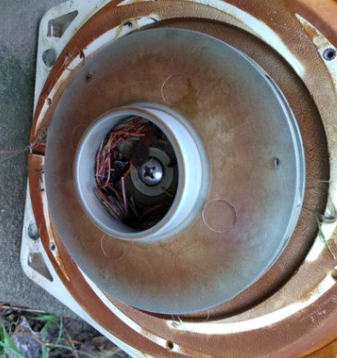
High heat can cause electrical components to fail or wiring to become brittle. Look for:
- Leaks: Even a small "weep" at the pump seal will accelerate under the pressure of a 12-hour run time.
- Error Codes: Check your automation screen. If you see "High Salt" or "Low Flow" in gilbert pool maintenance checks, it’s often a sign that the water temperature is messing with the sensors.
- Shade: If you can safely lean a piece of plywood or a temporary shade over your equipment (without blocking airflow), do it. Keeping the direct sun off the pump and the automation panel can add years to their lifespan.
Getting Through the Peak
If you’ve done these five things: balanced your chemistry with a Taylor K-2006 test kit, topped off your water, shifted your pump run times, cleared your Pentair Rebel pool cleaner, and checked your equipment: you’re ahead of 90% of pool owners in the East Valley.
But look, I get it. It’s 118 degrees. The last thing you want to do is spend an hour sweat-testing your water or trying to figure out why your pump is making that high-pitched "death squeal."
That’s why I started the Virtual Service Call.

If something doesn't look right, or if your water is turning that "pale lime green" despite your best efforts, don't wait for a full-service tech to have an opening in three weeks. You can upload a photo or video of your equipment or your water through our site. I’ll personally take a look and give you a real diagnosis. Sometimes it’s a 5-minute fix you can do yourself; sometimes it’s a warning sign that we need to get a truck out there before your motor melts.
Whether you're looking for chandler pool service, mesa pool cleaning, or expert help in Queen Creek, we’re here to make sure your pool survives the 2026 heat wave. Stay hydrated, stay cool, and keep an eye on that skimmer.
: Jeff Niegsch
Founder, Complete Aquatic Solutions