If you’ve lived in the East Valley for more than one summer, you know that Arizona pool maintenance isn’t just a weekend chore: it’s a battle against the elements. Between the record-breaking heat of 2026 and the relentless dust storms that roll through Gilbert and Queen Creek, keeping your water clear is harder than ever.
I’m Jeff Niegsch, and I’ve spent over 21 years working on pools right here in the Mesa and Chandler areas. I’ve seen it all: pumps melted by the sun, "green" pools that look like science experiments, and homeowners spending thousands on chemicals they didn't actually need.
In 2026, the stakes are higher. Water is more expensive, and the heat is more intense. If you want to keep your pool a sanctuary instead of a money pit, you need to stop making these seven common mistakes.
1. Relying on Cheap Test Strips
I get it: strips are fast. But in the Arizona sun, they are often wildly inaccurate. By the time a test strip tells you your chlorine is "a little low," it’s usually already gone, and algae is already moving in.
In 2026, precision is your best friend. For a real pool chemistry solution, you need a professional-grade kit like the Taylor K-2006 test kit. It uses a titration method (counting drops) that gives you an exact number. Knowing you have exactly 3.0 ppm of chlorine versus "somewhere between 1 and 5" is the difference between a clear pool and a green one after a Tuesday afternoon in Mesa.
2. Ignoring Calcium Hardness (The "Arizona Scale")
Our water in San Tan Valley and Queen Creek is notoriously hard. As water evaporates in the 110-degree heat, the water leaves, but the calcium stays behind. Over time, your calcium hardness levels skyrocket.
When calcium gets too high, it starts to "fall out" of the water, creating white, crusty scales on your tiles and, worse, inside your plumbing and heater.
- The Fix: Don’t just add more chemicals. Once your calcium hardness hits 400-600 ppm, it’s time to consider a partial drain and refill. If you see white buildup on your spillways, you’re already behind.
3. Letting Your Suction Cleaner "Go Ghost"
I see a lot of Pentair Rebel pool cleaners and similar models sitting in the corner of pools in Chandler, doing absolutely nothing because the owner hasn't checked the "guts" in months.
Arizona dust is fine, but our monsoon debris isn't. A single small pebble or a twig from a mesquite tree can jam a Rebel’s gears. If your cleaner isn't moving, your circulation dies.
- The Fix: Check the "mouth" of your cleaner every week. If you have a Rebel, make sure the internal turbines are spinning freely. A cleaner that stays stuck in one spot leads to "dead zones" where algae loves to grow.
4. Running Your Pump at the Wrong Time
Set circulation using the actual pool, equipment and flow requirements. Confirm the filter, sanitizer, heater and cleaner minimum flow requirements before selecting pump speed or schedule. A universal number of hours cannot establish adequate filtration or disinfection. Inspect results and adjust with qualified help; a variable-speed pump can use different schedules for different tasks. Pentair servicing guidance.
- The Fix: If you have a variable speed pump (like a Pentair IntelliFlo), run it at a low speed for a longer duration: ideally 10 to 12 hours. Set your higher speeds for the peak heat hours (noon to 4 PM) to ensure chemicals are distributed when they are needed most.
5. Forgetting About Phosphates
"But Jeff, my chemistry is perfect, and the water is still cloudy!" I hear this every week in Gilbert. The culprit? Phosphates.
Phosphates are basically "algae food" that enters your pool through dust, rain, and even landscape runoff. Arizona’s 2026 "Haboub" season has been brutal, dumping tons of organic matter into our pools.
- Assess actual free chlorine and pH readings alongside cyanuric acid, filtration and circulation. High CYA affects disinfection, but a single threshold does not make all chlorine useless. Phosphate, hardness or filter problems likewise require diagnosis rather than an absolute claim that chlorine cannot work. Follow your sanitizer label and get qualified advice before changing water; do not drain based on this article alone. CDC testing guidance.
6. The "Hose Trap" and Water Levelers
Because of the extreme evaporation in the East Valley (sometimes 1/4 inch a day!), many homeowners in San Tan Valley rely on manual hoses or old mechanical levelers. If your water level drops below the skimmer, your pump will suck air.
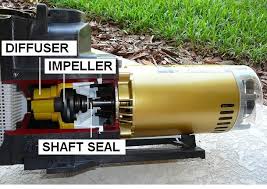
As you can see in the image below, a pump that runs dry or struggles with debris can lead to serious motor damage and corrosion.

- The Fix: If you don't have an auto-leveler, check your water every single day. If you do have one, make sure the float isn't stuck. A dry pump is a $600+ mistake you don't want to make in the middle of July.
7. Throwing Parts at a Problem
This is the biggest mistake of all. I see DIYers in Mesa and Queen Creek buy a new motor, a new filter, and a new salt cell, only to find out the problem was a $10 o-ring or a simple suction leak.
In 2026, pool automation tools and smart systems like the Pentair IntelliCenter can give you a lot of data, but they don't always give you the answer. Diagnosing a pool problem requires an "eye" for the system as a whole.
How to Fix It Without the Service Call Fee
You shouldn't have to pay $150 just for a technician to show up and tell you that you’re doing it wrong. That’s why we launched the Virtual Service Call.
If you’re staring at an IntelliFlo error code or your heater won't ignite, don't just start clicking "buy" on Amazon. You can upload photos or a quick video of your equipment pad, and I’ll take a look. I'll give you a real diagnosis and the exact part numbers you need: saving you time, money, and a whole lot of frustration.
Still not sure what's wrong? Get a virtual second opinion from Jeff before you spend a dollar → casarizona.com/virtual-technician
Local East Valley Pool Problems 2026: Quick Cheat Sheet
- Queen Creek: High dust area. Clean your filter every 3-4 months, not once a year.
- Gilbert/Mesa: Older equipment pads. Watch for suction-side leaks (bubbles in the pump basket).
- Chandler: High bather loads. If the kids are in the pool all day, you need to "shock" the water more frequently to keep up with the organic load.
Whether you're handling your own mesa pool cleaning or looking for a gilbert pool maintenance expert to take over, remember that consistency is the key. A little bit of work every day prevents a massive bill at the end of the month.
Stay cool out there, and keep that water blue!