If you’re a pool owner in Mesa, Gilbert, or Queen Creek, you know the drill. You step outside on a Saturday morning, Taylor test kit in hand, expecting to see that nice shade of pink or red. Instead, the water in your comparator tube stays as clear as a San Tan Valley sky. Your chlorine is gone, again.
It feels like you’re dumping money into a blue hole. In the industry, we call this "chlorine demand" or "chlorine loss," and in the Arizona summer of 2026, it’s a battle every single one of us is fighting. The heat is relentless, the dust is everywhere, and your pool is basically a giant bowl of soup trying to cook your chemicals.
As a tech at Complete Aquatic Solutions, I get asked the same thing every day: "Where did my chlorine go?" Most DIYers think they just need more tablets, but usually, there's a deeper reason why your sanitizer is disappearing.
Here are the 10 most common reasons your chlorine is missing and what you can do to fix it before the algae takes over.
1. The Arizona Sun (The UV "Burn-off")
In the East Valley, we don't just get sunshine; we get a UV bombardment. Without protection, the sun’s ultraviolet rays can destroy up to 90% of your pool’s free chlorine in just two hours. Think of it like putting ice on the sidewalk in July, it doesn't stand a chance.
UV rays penetrate the water and break apart the chlorine molecules through a process called photolysis. This is the number one cause of chlorine loss for Queen Creek pools during the peak of summer.

2. Low Cyanuric Acid (The Missing Shield)
If the sun is the enemy, Cyanuric Acid (CYA) is your pool's sunscreen. We call it "stabilizer" or "conditioner." CYA forms a weak chemical bond with your chlorine, protecting it from those UV rays.
If your CYA level is below 30 ppm, your chlorine is essentially naked. You can dump ten gallons of liquid shock in there at noon, and it’ll be gone by 3:00 PM. For most Arizona pool maintenance schedules, we like to see CYA between 30-50 ppm (or slightly higher for salt pools).

3. High Water Temperature (The "Bacteria Buffet")
As our temperatures in Chandler and Mesa climb toward 110°F, your pool water often hits the mid-90s. Warm water is the perfect breeding ground for bacteria and micro-organisms.
The hotter the water, the faster these organisms multiply. Your chlorine has to work overtime just to keep up with the basic "kill rate." When the water hits 92 degrees, your chlorine is being consumed significantly faster than when it was 78 degrees back in April. It’s not just "evaporating", it’s being used up in a war against microscopic invaders.
4. Excessive Bather Load (The "Human Factor")
Summer is for pool parties, but every person who jumps in brings a payload of organic contaminants. Sweat, body oils, hairspray, and, let’s be honest, urine, all create a massive "chlorine demand."
If you had five kids playing in the pool all afternoon in Gilbert, your chlorine levels will likely be zero by evening. Each of those kids is "eating" your chlorine. After a big swim day, you must supplement your regular dosage with a quick shock to reset the balance.
5. High Phosphate Levels (Algae Food)
Phosphates enter your pool through dust, lawn fertilizer, and even some city water sources in the East Valley. While phosphates don't technically "eat" chlorine, they are the primary food source for algae.
If your phosphate levels are high (above 500 ppb), algae can grow faster than your chlorine can kill it. You’ll find yourself constantly adding chlorine just to keep the water clear, never realizing that you're fighting a losing battle because the "food" is still in the water. We recommend a phosphate remover as part of your monthly pool chemistry solutions.
6. Chlorine Lock (Too Much CYA)
Wait, didn't I say you needed CYA? Yes, but you can have too much of a good thing. If you exclusively use chlorine tablets (Trichlor), your CYA levels will eventually skyrocket.
Assess actual free chlorine and pH readings alongside cyanuric acid, filtration and circulation. High CYA affects disinfection, but a single threshold does not make all chlorine useless. Phosphate, hardness or filter problems likewise require diagnosis rather than an absolute claim that chlorine cannot work. Follow your sanitizer label and get qualified advice before changing water; do not drain based on this article alone. CDC testing guidance.
7. Rising pH Levels
Arizona water is notoriously "hard" and has a high pH. When your pH climbs above 7.8, your chlorine becomes sluggish. At a pH of 8.0, your chlorine is only about 20% effective. It’s still there, but it’s basically taking a nap. Keeping your pH between 7.4 and 7.6 is vital to ensuring the chlorine you do have is actually working.
8. Monochloramines (The "Fake" Chlorine Smell)
If your pool smells strongly of "chlorine," it actually means you have too little effective chlorine. That smell comes from chloramines: chlorine that has already bound to contaminants and is no longer useful. These "spent" chemicals take up space and make your water cloudy, requiring a "breakpoint chlorination" (shocking) to burn them off and free up your active chlorine.
9. Poor Circulation & Dead Spots
If your water isn't moving, the chlorine isn't reaching every corner of the pool. Algae often starts in "dead spots" like behind the ladder or in deep corners. This is where a reliable pool cleaner like the Pentair Rebel pool cleaner is a lifesaver. It helps stir up the water and move debris toward the filter.
Set circulation using the actual pool, equipment and flow requirements. Confirm the filter, sanitizer, heater and cleaner minimum flow requirements before selecting pump speed or schedule. A universal number of hours cannot establish adequate filtration or disinfection. Inspect results and adjust with qualified help; a variable-speed pump can use different schedules for different tasks. Pentair servicing guidance.
10. Equipment Failure
Sometimes, the reason is mechanical. If you have a salt water pool, your salt cell might be scaled up or reaching the end of its life (usually 3-5 years). If the cell isn't producing, your chlorine level will drop to zero almost instantly in the heat.
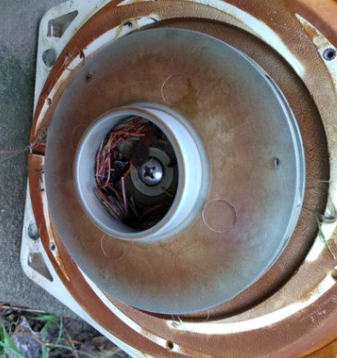
Similarly, if your pump motor is failing or your filter is clogged, the chemistry won't matter because the system can't process the water. We see plenty of corroded pump motors in the valley that just can't keep up with the demand of a 115-degree day.
What to Do: The "Ask the Tech" Action Plan
Don't panic. Dealing with arizona pool maintenance is a marathon, not a sprint. Here is how you get your water back under control:
- Get a Real Test Kit: Stop relying on those "guess strips." They are notoriously inaccurate in the heat. Invest in a Taylor K-2006 test kit. It uses liquid reagents that give you precise readings for Free Chlorine, Combined Chlorine, pH, Alkalinity, and CYA.
- Test at the Right Time: Don't test at 2:00 PM. Test in the early morning or late evening when the sun isn't skewing the results.
- Check Your CYA: If it's below 30, add stabilizer. If it's over 90, consider a partial drain. If you're in Chandler pool service territory, give us a call to help calculate exactly how much water to swap.
- Shock at Night: Always add your shock or liquid chlorine after the sun goes down. This gives the chemical all night to work without being "burned off" by the UV index.
- Inspect Your Equipment: Check your skimmer baskets, clean your filter, and make sure your pool automation tools are scheduled correctly for the summer heat.
If you're looking at your pool and it’s starting to look more like a lagoon than a luxury resort, we’re here to help. Whether you need a one-time cleaning to get things back on track or professional gilbert pool maintenance to handle the heavy lifting all summer, Complete Aquatic Solutions has you covered.
Need a Hand? Try Our Virtual Tech Service!
Not sure if your salt cell is dead or if you just need more acid? We offer a Virtual Tech service where you can hop on a call with one of our pros. We’ll walk you through the diagnostics over video so you can fix it yourself with confidence.
Book a Virtual Tech Session or Request Service Here
Don't let the Arizona sun win the battle for your backyard. A little chemistry knowledge and the right equipment can keep your pool pristine all summer long!