It’s another Saturday in the East Valley, and if you’ve lived in Mesa, Gilbert, or Chandler for more than five minutes, you know what’s coming. The thermometer is creeping toward 115°F, and your swimming pool is about to take a beating.
When the heat hits triple digits and stays there, your pool isn't just a place to cool off; it’s a living chemical ecosystem fighting for its life. Between the relentless UV rays and the occasional afternoon dust storm rolling into Queen Creek and San Tan Valley, keeping your water clear isn't just about looks: it’s about chemistry and equipment survival.
I’ve spent over 21 years in the Arizona pool industry, and I’ve seen exactly what happens when a homeowner lets their guard down during a record-breaking July weekend. Algae blooms don’t take a holiday. If you want to keep your pool from turning into a swamp by Monday morning, follow this "Ask the Tech" survival guide.
1. Stop Guessing, Start Testing (The Taylor K-2006 Rule)
During a 115°F weekend, your chlorine demand is at an all-time high. The sun acts like a giant vacuum, sucking the sanitizer right out of your water. If you’re still using those cheap hardware store test strips, you’re flying blind.
In this heat, I always recommend using a professional-grade kit like the Taylor K-2006 test kit. It uses liquid reagents that give you an actual "Free Chlorine" reading, not just a vague color match.
The Survival Goal: You want your Free Chlorine (FC) levels between 3.0 and 5.0 ppm. If you’re at 1.0 ppm on Friday afternoon, you’ll be at zero by Saturday at 2:00 PM. Once that chlorine hits zero, the algae start feasting.
Check your Cyanuric Acid (stabilizer) too. In the East Valley, we like to see this around 30-50 ppm. It acts like sunscreen for your chlorine. Too little, and the sun burns your chlorine in minutes. Too much, and your chlorine becomes "locked" and ineffective.

2. Run the Pump Like You Mean It
A common mistake I see in east valley pool problems 2026 is homeowners trying to save a few bucks on electricity by cutting back pump run times in the summer. That is a recipe for disaster.
Set pump speed and schedule from the actual pool and equipment requirements. Confirm adequate flow for filtration, sanitizer, heater and cleaner before lowering speed. No universal air-temperature formula or number of operating hours proves sanitation. Inspect flow, filter condition and water-test results, and use the exact model instructions or qualified assistance. Pentair servicing guidance.
Pro Tech Tip: Split your run time. Run the pump during the hottest part of the day (noon to 6:00 PM) to keep the chemicals circulating while the UV is at its peak. Then, run it again in the early morning hours. This keeps the water moving and helps distribute the heat more evenly. If you have a variable speed pump, keep it on a low, efficient RPM for the long haul and ramp it up during the peak afternoon heat.
3. Don't Let Your Equipment Melt
People forget that pool equipment sits outside in the direct sun. I’ve seen pool pump motors with visible wiring damage simply because they were overworked and overheated in a tight, unventilated equipment pad in Chandler.
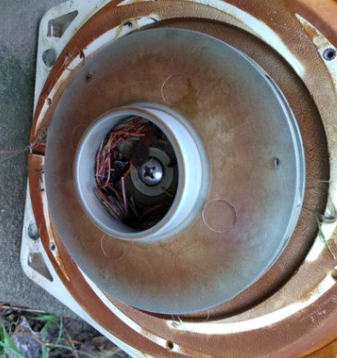
Check your pump for any "screaming" or whining noises. This is often a sign of bearings failing, and the 115°F heat will push them over the edge. Also, make sure your pool cleaner, like the Pentair Rebel pool cleaner, is actually moving. A cleaner that sits in one spot for three days can actually leave a "ghost" mark on your plaster because the water underneath it isn't circulating.
If you have pool automation tools like the Pentair IntelliCenter or EasyTouch, now is the time to check your schedules. Make sure your "High Speed" or "Clean" cycles are set for the afternoon. If your automation screen is blank or acting up, the heat might be fried the motherboard: it happens more than you’d think in Mesa.
4. The Evaporation Trap and Your Water Level
In a Mesa weekend at 115°F, you can lose up to half an inch of water a day just to evaporation. If your water level drops below the mouth of the skimmer, your pump will start sucking air instead of water.
When a pump sucks air, it loses "prime." The water inside the pump basket starts to boil, which can warp the basket, melt the PVC fittings, and destroy the pump seal. This is a $500+ mistake that is easily avoidable.
Check your water level every morning. It should be halfway up the skimmer opening. If your "auto-fill" isn't keeping up, grab the garden hose and give it a manual boost. Don't trust the float valve to handle 115-degree evaporation solo.
5. Watch the Horizon for Monsoons
In the East Valley: especially out toward Queen Creek and San Tan Valley: extreme heat is often the precursor to a massive haboob. One dust storm can dump five pounds of fine desert silt into your pool in ten minutes.

Dust is organic. Organic material consumes chlorine. If a storm hits on Saturday night, your chlorine will be gone by Sunday morning, and the "Mesa Mud" at the bottom of your pool will turn into an algae forest.
If you see a storm coming:
- Empty your baskets: Make sure the skimmer and pump baskets are clear so the extra debris doesn't choke the flow.
- Turn off the pump if it gets crazy: If the wind is blowing umbrellas into the pool, turn the pump off so it doesn't suck in a plastic bag or large debris that could clog the intake.
- Check the chemistry immediately after: Once the dust settles, test your water and likely add a "shock" dose of liquid chlorine to counteract the organics.
Surviving the Weekend
Arizona pool maintenance isn't a "set it and forget it" hobby, especially not in July. It’s about staying one step ahead of the sun. If you can keep your chlorine levels stable, your water moving, and your level up, you’ll survive the 115°F spike just fine.
But look, I get it. You’re busy, it’s hot, and sometimes the equipment just doesn't do what it’s told. If you’re looking at your pump and it’s making a weird noise, or your water is starting to look "hazy" and you can't figure out why, don't wait for it to turn green.

Need a Second Opinion?
Before you run down to the big-box store and spend $400 on chemicals you might not need, or call out a repair tech who’s going to charge you just to show up, try our Virtual Service Call.
You can upload a few photos or a quick video of your equipment or your water, tell me what’s going on, and I’ll give you a real professional diagnosis. It’s a remote second opinion from a guy with 21 years in the trenches. I’ll tell you exactly what’s wrong so you can fix it yourself or know exactly what to tell a repairman.
Book a Virtual Service Call here and let's get that pool back on track before Monday.
Stay cool, East Valley.
( Jeff)