If you stepped outside in Gilbert or Queen Creek this morning, you felt it. That heavy, sticky air isn’t just making your morning walk miserable: it’s a neon sign that monsoon season is officially moving in. As of today, July 15, 2026, we’ve got a moisture surge hitting the East Valley with a 60% chance of rain over the next 48 hours.
I’ve been maintaining pools in this desert for over 21 years. I’ve seen “haboobs” that turn clear water into chocolate milk in twenty minutes and rainstorms that drop the pH so fast your copper heat exchanger starts sweating. When the humidity hits 40% and the clouds turn that deep purple over the Superstitions, your pool chemistry is about to go on a rollercoaster ride.
Most east valley pool problems in 2026 stem from one thing: being reactive instead of proactive. Here are the five things you need to know about your pool chemistry right now before the first raindrop hits the water.
1. The pH Seesaw: Rain vs. Dust
In the East Valley, we don't just get rain; we get "mud rain."
Pure rainwater is naturally acidic (usually around 5.0 to 5.5 pH). When that hits your pool, it wants to pull your pH down. However, the wind that comes before the rain is usually carrying half the dirt from a construction site in San Tan Valley or a farm in Mesa. That desert dust is often alkaline.
So, what happens? You get a weird seesaw effect. The rain tries to tank the pH, while the dust tries to spike it. If your pH swings too low (under 7.2), your water becomes corrosive. It’ll eat your grout and irritate your eyes. If it swings too high (over 7.8), your chlorine basically goes on vacation: it stays in the water but stops killing germs.
The Fix: Don’t guess. Test your water the second the wind stops. If you’re seeing a massive swing, focus on getting your Total Alkalinity (TA) between 80–120 ppm first. That’s your "anchor" that keeps the pH from bouncing around like a pinball.

2. Chlorine Demand Is About to Skyrocket
When I talk to homeowners about arizona pool maintenance, the biggest surprise is always how fast chlorine disappears during a storm.
It’s not just the rain diluting the water. It’s the "organic load." Every leaf, piece of pollen, and microscopic skin cell blown into your pool is "food" for organic growth. Your chlorine has to work overtime to "oxidize" (burn up) that debris.
If you usually keep your chlorine at 2.0 ppm, a single monsoon storm can drop it to 0.0 ppm in a matter of hours. Once you hit zero, the 109°F heat we're seeing today will turn that water green faster than you can find your skimmer net.
Test first. Choose any treatment from current measurements, a credible pool volume and the actual sanitizer label; a forecast, calendar or upcoming party does not determine a safe dose. Follow label reentry instructions and retest before allowing swimming. A fixed chlorine target does not guarantee removal of every contaminant. CDC testing guidance. CDC chemical safety.
3. The Fertilizer Factor (Phosphates and Nitrates)
This is the "invisible" part of pool chemistry solutions.
Monsoon winds carry dust from the surrounding desert and agricultural areas in Queen Creek and Chandler. This dust is loaded with phosphates: essentially algae fertilizer. Rain also brings in nitrates from the atmosphere.
You can have "perfect" chlorine levels, but if your phosphate levels spike, you’re basically providing an all-you-can-eat buffet for algae. This is why some pools in Mesa or Gilbert stay green even when the owner is dumping bags of shock into the water.
The Fix: If your pool has been hit by a heavy dust storm, skimming isn't enough. You need to test for phosphates. If they are over 200 ppb (parts per billion), a phosphate remover is your best friend. It’s a lot cheaper to remove the food source than it is to fight a blooming algae forest.
4. Debris vs. Your Equipment
Chemistry is only half the battle; circulation is the other half. If your filter is clogged with fine desert silt, your chemicals won't mix, and you'll get "dead spots" where algae can hide.
I'm a big fan of the Pentair Rebel pool cleaner for our area. It’s a gear-driven suction cleaner that doesn't get "stuck" on the big leaves or the fine sand we get in the East Valley. But even a Rebel can’t help you if your pump basket is packed tight with mesquite pods.
High humidity and rain can also mess with your pool automation tools. If you have an older system, check your seal gaskets. Moisture getting into a control panel or a poorly sealed motor can lead to expensive repairs.

The Tech Tip: Empty your pump and skimmer baskets immediately after a storm. If the baskets are full, the pump has to work harder, which can lead to overheating or cavitation.
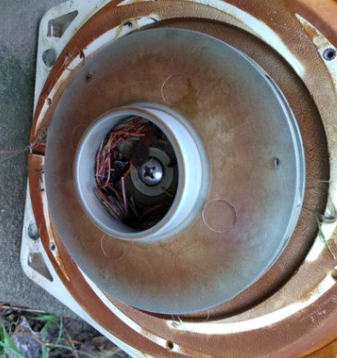
If you're hearing a weird "screaming" sound from your pump after a rain, don't ignore it. That's usually a bearing failing or a seal leak. Catching it early can save you from a $800 motor replacement. If you're unsure what that sound is, snap a video and upload it to our Virtual Service Call. I can usually tell you exactly what’s wrong before you spend a dime on a service call.
5. Stop Using Test Strips (The Taylor K-2006 Rule)
If you are still using those little paper "dip-and-read" strips for your chandler pool service or DIY maintenance, you're flying blind during monsoon season.
Those strips are notoriously inaccurate when the humidity is high or the water is turbulent. During a monsoon, you need precision. I always recommend the Taylor K-2006 test kit. It’s the industry standard for a reason. It uses professional-grade reagents that tell you exactly where your Free Chlorine, pH, and Cyanuric Acid levels are without the guesswork of "which shade of pink is this?"
The Fix: Invest in a real kit. If you can't read the results or they seem "off," that's the perfect time to get a second opinion. I've spent 21 years looking at Taylor kits; if you're a DIYer in the East Valley, I’m happy to help you interpret those results via our remote diagnostic service.

Summary for East Valley Residents
Monsoon season doesn't have to mean a green pool. Whether you're looking for mesa pool cleaning or gilbert pool maintenance, the secret is just staying ahead of the weather.
- Balance the TA to stop the pH seesaw.
- Raise Chlorine before the storm.
- Watch for Phosphates after the dust settles.
- Clean the baskets and check your Pentair Rebel for clogs.
- Use a Taylor K-2006 to get the real story.
If you’re staring at your equipment in Queen Creek or San Tan Valley and something just doesn't look right, don't wait for the water to turn. Visit us at casarizona.com and book a Virtual Service Call. You send the photos, I give you the diagnosis. Stay dry out there!