If you live in Mesa, Gilbert, or Chandler, you don’t need me to tell you it’s hot. But looking at the forecast for this weekend: July 23rd through the 26th: we’re seeing a sustained 113°F across the East Valley. As a pool operator with over 21 years in the Arizona trenches, I can tell you that this kind of heat isn't just "uncomfortable" for your pool; it’s an all-out assault on your water chemistry and your equipment.
When the mercury hits 110+, your pool stops being a relaxing oasis and starts acting like a giant chemistry experiment gone wrong. If you aren't proactive over the next 72 hours, you’ll be looking at a "green monster" by Monday morning.
Here is the straight talk on how to keep your pool clear and your equipment running through this record-breaking weekend.
The Chemistry Battle: Why Your Chlorine Disappears
In 113°F heat, the sun isn't just warming the water; it’s eating your chemicals. UV rays destroy unstabilized chlorine in about two hours. Combine that with high bather loads (because everyone is jumping in to cool off) and you have a recipe for east valley pool problems 2026.
Get a Real Test Kit
If you are still using test strips to manage your arizona pool maintenance, stop. They are notoriously inaccurate in extreme heat. I always recommend the Taylor K-2006 test kit. It’s the industry standard for a reason. It uses drops, not strips, which gives you a precise reading of your Free Chlorine and Cyanuric Acid (CYA) levels.
Measure free chlorine and pH alongside cyanuric acid when diagnosing persistent sanitizer problems. CYA affects disinfection, but a single threshold is not a universal point where all chlorine becomes useless. Hardness and total dissolved solids are different measurements. Do not diagnose from a “chlorine lock” slogan or assume that draining is automatically required; get qualified advice on water replacement. CDC guidance.
The 113°F Chemistry Strategy:
- Test Daily: During this heatwave, test your water every evening after the sun goes down.
- Maintain Higher Chlorine: Normally, 2-3 ppm of chlorine is fine. This weekend? Aim for 5 ppm. You need that extra "buffer" to handle the heat and the organic load.
- Liquid Gold: Use liquid chlorine for a quick boost at night. It doesn’t add CYA or calcium, which are already climbing due to evaporation.

Circulation: Running Your Pump When It Matters
I get asked this constantly in Queen Creek pools: "Should I run my pump during the day or at night?"
In 113°F heat, the answer is: Both, but with a strategy.
Set pump speed and schedule from the actual pool and equipment requirements. Confirm adequate flow for filtration, sanitizer, heater and cleaner before lowering speed. No universal air-temperature formula or number of operating hours proves sanitation. Inspect flow, filter condition and water-test results, and use the exact model instructions or qualified assistance. Pentair servicing guidance.
Equipment Stress
Extreme heat is brutal on pool motors. If your pump is sitting in the direct Mesa sun, it can overheat and trip the thermal overlay.
Pro Tip: If you have pool automation tools like the Pentair IntelliCenter, you can program your pump to run at a lower RPM for longer periods. This keeps the water moving without putting max stress on the motor during the hottest part of the day.
If you see your pump motor looking like this, you've already waited too long:
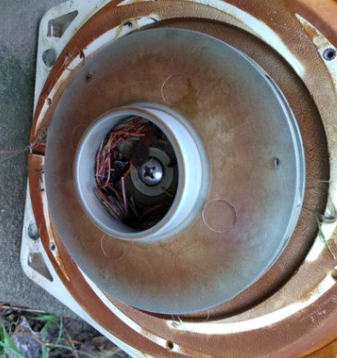
A corroded or overheating pump can fail exactly when you need it most. Keep the area around your motor clear of debris to allow for maximum airflow.
Evaporation: The Silent Water Thief
In the East Valley, we can lose up to half an inch of water a day during a heatwave. This causes two major issues:
- Chemical Concentration: As water evaporates, it leaves behind minerals like calcium and salt. Your Total Dissolved Solids (TDS) will spike, making it harder for your chemicals to work.
- Pump Failure: If the water level drops below the skimmer mouth, your pump will suck air. A pump running "dry" will melt its internal seals in minutes.
The Bucket Test: If you think you have a leak but aren't sure if it's just the heat, try the bucket test. Fill a bucket with water and set it on the first step of your pool. Mark the water level inside the bucket and the pool level outside the bucket. After 24 hours, if the pool level dropped significantly more than the bucket level, you have a leak. If they are the same, it’s just the 113°F Arizona sun doing its thing.
Cleaning the Debris
With the heat often comes those late-afternoon monsoon dust storms. Dust is organic matter. Organic matter eats chlorine.
Make sure your Pentair Rebel pool cleaner is in the water and moving. The Rebel is a workhorse for Mesa pool cleaning because it handles the fine Arizona silt better than most suction cleaners. Check the leader hose and the internal gears: if it’s sluggish, your pool will start to gather "dead spots" where algae will take hold.
If you are struggling with excessive sediment, a pre-filter like a cyclone separator can save your main filter from clogging every three days.

A cyclone separator helps spin out the heavy Arizona dust before it reaches your cartridge filter, keeping your flow rate high during extreme heat.
Quick Checklist for July 23-26
- Check water levels every morning. Don't let it drop below the mid-point of the skimmer.
- Empty all baskets. Skimmer and pump baskets need to be clear to ensure maximum flow.
- Brush the walls. Even if the water looks clear, brush the "shady" spots (under the steps, behind the ladder) where algae starts.
- Do not delay assessment of a zero sanitizer result simply because it is daytime. Verify the reading and keep swimmers out while conditions are uncertain. Follow the sanitizer label for any treatment, circulation and reentry conditions. Evening application can reduce sunlight exposure for some products, but time of day does not determine the dose or prove the water is safe. CDC guidance. Chemical safety guidance.
Local Expertise Matters
Whether you need Chandler pool service or you're managing a commercial HOA pool in San Tan Valley, the rules of physics don't change. Heat creates demand, and demand requires maintenance.
If you’re looking at your equipment and something doesn't seem right: maybe a weird noise from the pump or a chemistry reading that makes no sense: don't guess. Spending $500 on the wrong chemicals or a part you don't need is a classic DIY trap.
At Complete Aquatic Solutions, we offer a Virtual Service Call. You send us photos or video of the problem, and you get a real diagnosis from me: someone who's been doing this for 21 years: before you spend a dime on a technician's house call or unnecessary parts.
Stay cool this weekend, East Valley. Keep that water moving, keep your chlorine up, and don't let the 113°F heat win.
Need a second opinion on your pool equipment?
Check out our DIY Diagnostics or contact us for professional support in Mesa, Gilbert, Chandler, and Queen Creek.