If you’ve lived in the East Valley for more than a single summer, you know the drill. We hit June, and suddenly the "dry heat" starts feeling like a convection oven. But this week is different. We are looking at a 114°F heat spike hitting Mesa, Gilbert, and Chandler.
In my 21 years of running Complete Aquatic Solutions, I’ve seen this exact weather pattern turn a crystal-clear pool into a swamp in less than 48 hours. When the mercury climbs past 110°F, your standard "once-a-week" maintenance routine officially breaks.
If you’re a DIYer in San Tan Valley or Queen Creek, you need to pivot your strategy right now. Here is why the 114°F spike matters and exactly what you need to do to keep your pool from becoming an expensive science project.
The Chlorine Burn-Off: Why "Standard" Isn't Enough
The biggest enemy of your pool this week isn't just the heat: it’s the UV index. In Arizona, the sun literally "eats" chlorine. At 114°F, the water temperature in most Mesa pools will climb into the 90s. Warm water is the perfect breeding ground for organic contaminants and algae.
When the water hits 90°F+, the metabolic rate of algae triples. If your free chlorine (FC) levels drop to zero for even four hours during the peak of the day, you’re going to wake up to a yellow or green tint on your steps.
Your Emergency Chemistry Move:
During this spike, don't wait for your weekly test. You need to be testing your chlorine levels daily. If you are using a Taylor K-2006 test kit, make sure your Free Chlorine is sitting on the high side of the recommended range (around 5-7 ppm) to provide a "buffer" for the midday burn-off.

Evaporation: The Silent Skimmer Killer
In a typical Arizona summer week, a pool might lose a quarter-inch of water a day. During a 114°F spike with low humidity, that can jump to nearly half an inch. For a standard 15x30 pool in Queen Creek, that’s roughly 100 to 120 gallons of water disappearing into thin air every single day.
Why does this matter for your Mesa pool cleaning? Because of your skimmer.
If your water level drops below the midpoint of the skimmer opening, your pump will start sucking air instead of water. This leads to a loss of prime. If your pump runs dry in 114°F weather, it’s not just a circulation issue: it’s a hardware-melting emergency.

The Pro Tip:
Check your water level every evening. If you don't have an auto-leveler (or if yours is struggling to keep up), stick a garden hose in there for 20 minutes while you're eating dinner. Keeping the water at the right level ensures your Pentair pump stays cool and functional.
Don't Let Your Pentair Equipment Cook
High heat is brutal on pool electronics. If your equipment pad is on the west side of your house in Chandler or Gilbert, it’s taking the full force of the afternoon sun.
Modern automation systems like the Pentair IntelliCenter or EasyTouch are built to handle heat, but they have their limits. When the ambient temperature is 114°F, the internal temperature of a closed metal or plastic control box can exceed 140°F.
Adjusting Your Runtimes:
- Shift to Night/Early Morning: Don't run your main filtration during the hottest part of the day (2 PM – 6 PM) if you can avoid it. Shift your heavy circulation to start at 4 AM. This keeps the water moving when it’s "coolest" and helps distribute chemicals before the sun starts its daily assault.
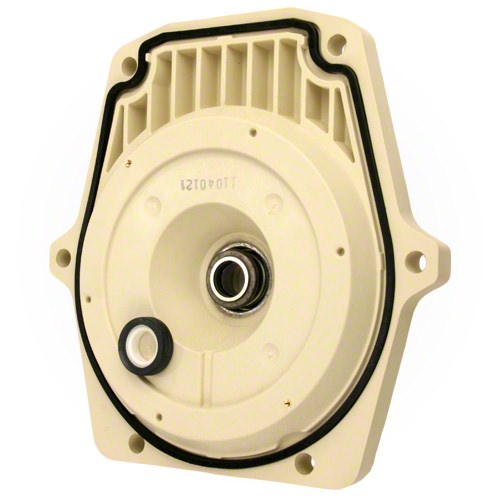
- Check Your Seals: Extreme heat causes rubber to expand and contract. If you have a small drip at your pump’s seal plate, it will get worse this week. Keep an eye on your pump seal plate for signs of white calcium buildup or active leaks.

The San Tan Valley Algae Strategy
In areas like San Tan Valley and Queen Creek, we often deal with more dust and "blow-in" debris from the surrounding desert. During a heat spike, this debris adds a massive "phosphate load" to the water. Algae loves phosphates.
If you’ve been neglecting your filter cleaning, this is the week it will bite you. A dirty filter reduces flow. Reduced flow means your chlorine isn’t being distributed evenly. In 114°F heat, "dead spots" in your pool (like deep-end corners or behind the ladder) will turn green first.
Set pump speed and schedule from the actual pool and equipment requirements. Confirm adequate flow for filtration, sanitizer, heater and cleaner before lowering speed. No universal air-temperature formula or number of operating hours proves sanitation. Inspect flow, filter condition and water-test results, and use the exact model instructions or qualified assistance. Pentair servicing guidance.
Your "Heat Spike Emergency" Checklist
To keep your pool blue this week in the East Valley, follow this "Ask the Tech" checklist:
- Daily: Check the water level. Keep it at the halfway mark on the skimmer.
- Daily: Check Free Chlorine. If it’s below 3 ppm at 6 PM, add a dose of liquid chlorine immediately.
- Every 2 Days: Empty your skimmer and pump baskets. Heat increases the "biological load," and a clogged basket kills your circulation.
- Automation: Set your Pentair Rebel or other suction cleaner to run during the early morning hours to keep the floor clear of dust.
- Chemistry: If your Cyanuric Acid (stabilizer) is below 30, your chlorine won't last two hours in this sun. If it’s above 80, your chlorine is being "locked" and won't work effectively. Aim for that 50-60 ppm "sweet spot" for Arizona summers.
Need a Second Opinion?
If you’re looking at your test kit and nothing makes sense, or if your pump is making a screaming sound that started right when the heat hit, don't guess. Arizona pool problems in 2026 are getting more complex with rising utility costs and harder water.
Before you go out and spend $200 on chemicals you might not need at the big-box store in Mesa, use our Virtual Service Call. You can send me a video of your equipment or a photo of your water test, and I’ll give you a real-world diagnosis and a game plan.
I’ve spent 21 years in the trenches of East Valley pool maintenance. I’m here to help you keep your pool as a place of refuge from the heat, not a source of stress.
Stay cool out there, Mesa.